
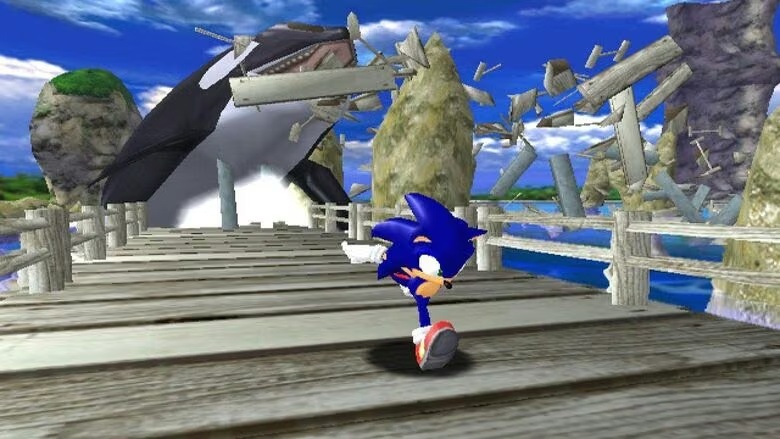
The Transition to 3D and Open Worlds: Sonic Team's Hardest Challenges
In an interview with Continue Magazine, Sonic Team head Takashi Iizuka shared memories of the most difficult projects of his career. As it turned out, the development of the iconic Sonic Adventure for the Dreamcast was a true test for the entire studio, and the team experienced similar difficulties again only while creating Sonic Frontiers.
Sonic's First Steps into Full 3D
According to Iizuka, creating Sonic Adventure was filled with endless trial and error:
- The team initially tried to translate the Green Hill Zone level into 3D space, but simply running through it wasn't fun.
- At that time, there were virtually no high-speed 3D platformers in game development, so the developers had to invent the mechanics from scratch.
- Iizuka noted that creating Sonic Adventure 2 was a much more pleasant process, as the core rules had already been established.
The Challenges of Open Spaces in Sonic Frontiers
A similar crisis hit Sonic Team only many years later during the development of Sonic Frontiers. The team quickly settled on the concept of vast open spaces ("Open Zone"), but struggled for a long time to figure out how to make gameplay in this format engaging.
In traditional Sonic games, the player always moves along a predetermined trajectory, making it easy to adjust speed and momentum. In an open world, there were no ready-made solutions, and the answers were only found midway through the game's development cycle.
Comments ...