
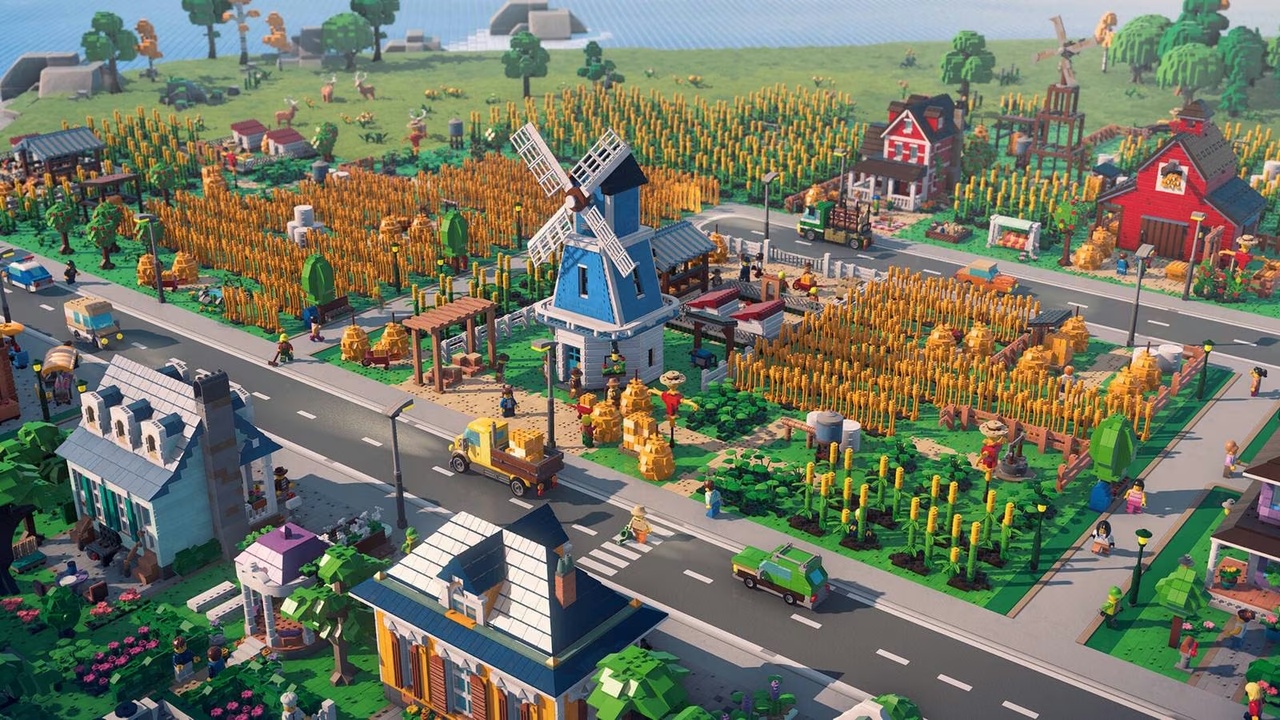
Polygon gained access to a preview build of Lego Skylines — the new city-building spin-off of Cities: Skylines from Iceflake Studios and Paradox Interactive. Several hours of gameplay covered both the early and late stages of the campaign, and despite some late-game balance issues, the smaller scale and deeper customization make Lego Skylines an intriguing branch of the series.
Smaller scale, more attention to people
Unlike Cities: Skylines, where entire residential and commercial districts play the main role, in Lego Skylines the individual household is more important. The campaign begins on a small island where you need to provide a family with housing, jobs, and shops — and only later think about the overall development of the city. The journalist called this approach a more pleasant introduction to the genre than the steep plunge offered by the classic Cities: Skylines.
Resident Needs and Decor
Each household has basic needs — jobs, kindergarten for families with children, leisure spaces for elderly people — which change over time just like in the main Skylines series. But the real highlight of Lego Skylines is the "attractiveness" need category: it is satisfied by decor items across several themes (cozy, natural, festive, industrial, etc.). The author admits that at first, they placed decorations randomly, and only later began consciously creating thematically coherent blocks by combining identical elements at different angles.
- Multiple house variations for each plot size — from classic "Tudor" style to "Bricktorian" suburbs
- Decorative items for plots that currently have little impact on residents' needs
- The ability to combine leisure venues into unofficial districts — for example, a music club next to graffiti walls
Simulation and Balance Issues
Despite the focus on decor, the underlying simulation hasn't gone anywhere: the city needs electricity, water, waste disposal, education, and other services, and building upgrades, just like in Cities: Skylines, expand their service radius at the cost of higher upkeep or pollution. At the same time, late-game balance is not yet ideal — in a save file with 2,000 residents, garbage kept accumulating despite a dozen recycling centers, and only half of the educated population achieved "highly educated" status even with multiple schools. The author suggests this could be tweaked with difficulty settings.
Leisure and Economy
Leisure venues in Lego Skylines unlock gradually: the more you build them, the better options become available — from small sports courts to full-fledged stadiums that further increase resident happiness. Industries produce color-coded goods for local shops: if a good is lacking, shops import it and lose profitability. At the same time, production in Lego Skylines takes up significantly less space than in Cities: Skylines — an entire farming block with four farms took up the area of a single farm in the original game.
Despite the brief time spent with the game, the Polygon journalist says they look forward to spending more time with Lego Skylines. The game's release date has not yet been announced.



Comments ...